Our 102 Year History
A journey that began with one craftsman in Market Street in 1924 has grown into a three‑generation framing house in Joo Chiat today. For more than a century, our small frame making business has been quietly preserving memories for families, artists, and businesses across Singapore.
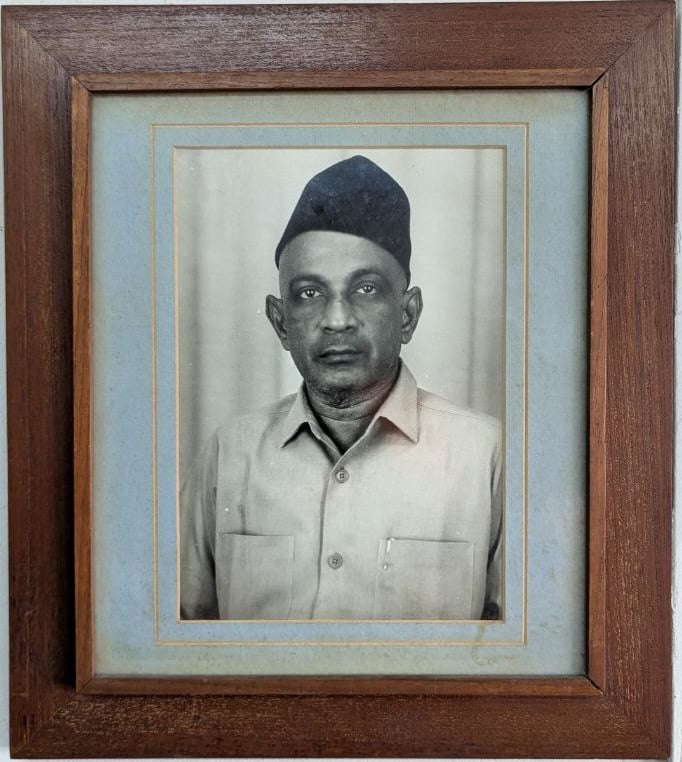
Portrait of Madarsa Maricar
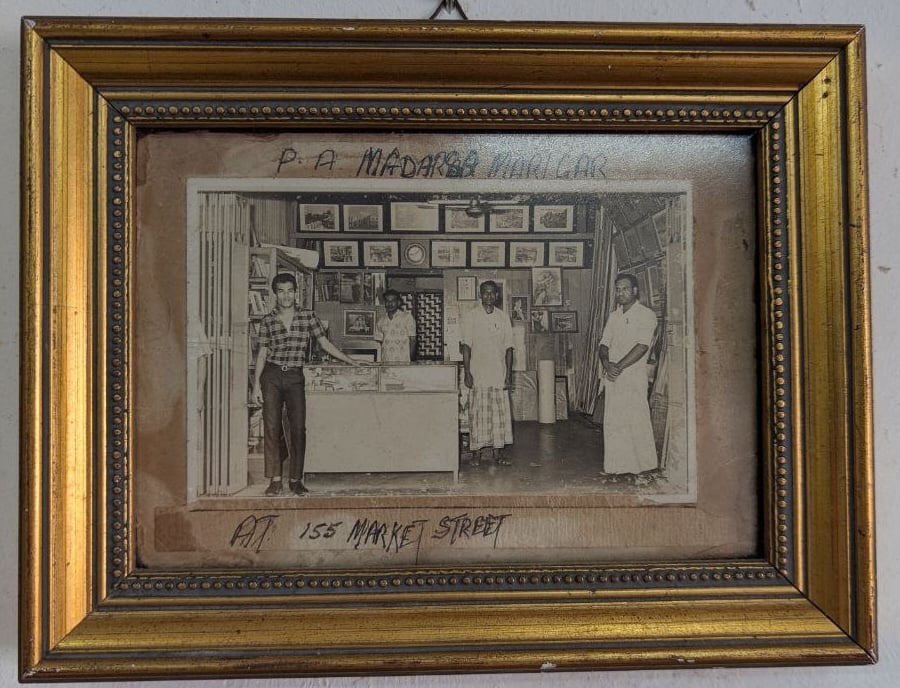
Sultan Maricar (far left) at Market Street shop
Market Street beginnings
The story starts with Madarsa Maricar, a merchant from Nagapattinam in Tamil Nadu, India, who arrived in Singapore around 1920. In 1924, he opened Maricar Frame Maker at 155 Market Street, right in the heart of a bustling trading district. Our shop was small, but it quickly became a trusted place for people who wanted their important moments preserved with care.
Framing in those days was entirely traditional. Wood was sawn by hand, corners were joined with simple nails and a hammer, and every piece of wood and glass was measured and cut by eye. There were no machines to correct mistakes. Only skill, patience, and pride in getting each frame right. Over more than fifty years, that dedication built a reputation that outlived its founder.
Beyond the workbench, Madarsa Maricar was also active in the wider Muslim community, contributing his views when new laws affecting Muslims were discussed in the 1950s. His name appears among those who gave input on the Muslims Bill in 1957, reflecting a belief that business and community responsibility should go hand in hand. When he passed away in 1977, he left behind not just our shop, but a way of working grounded in humility, service, and meticulous craftsmanship.
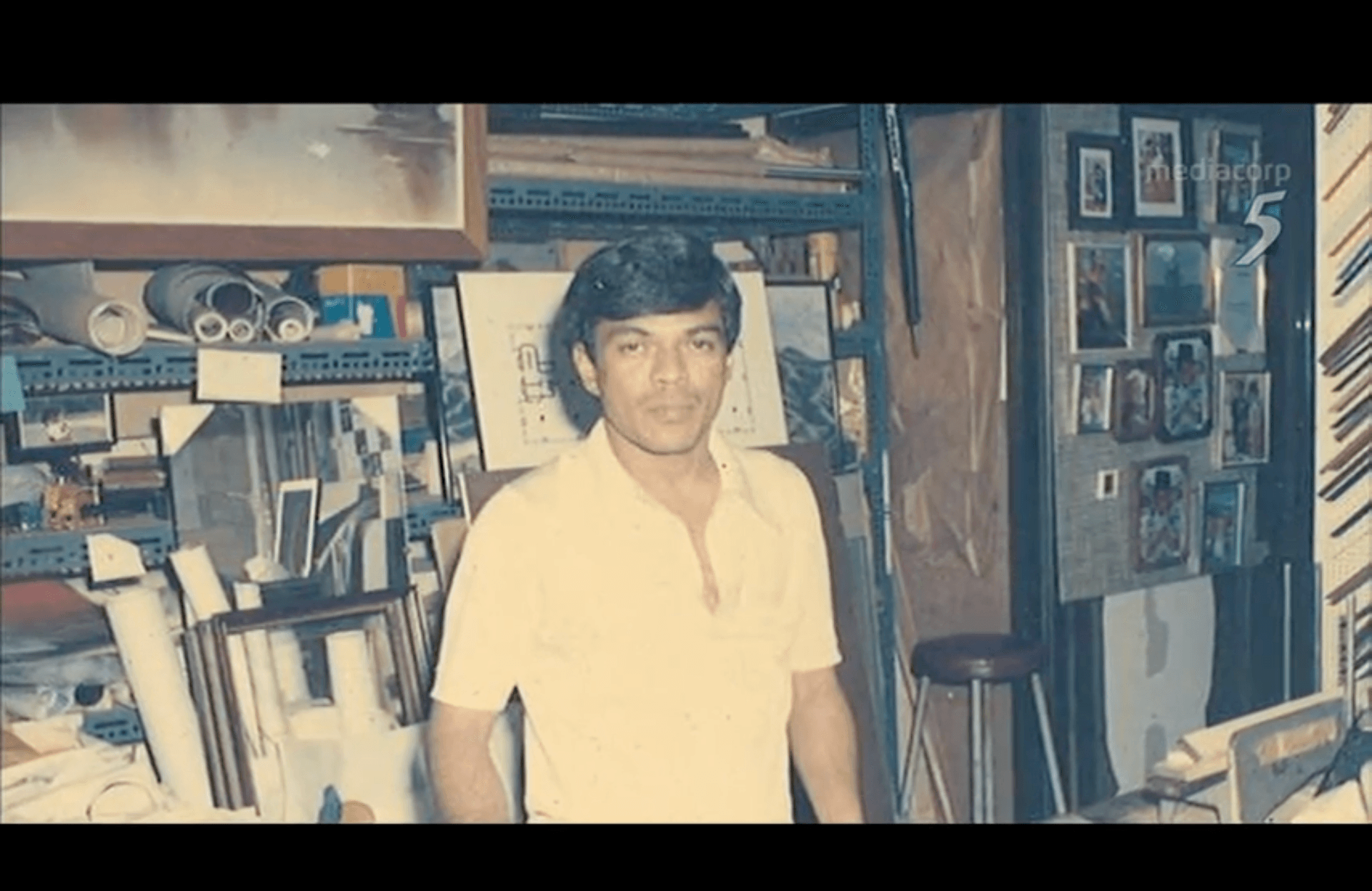
Sultan Maricar at his own shop at Hong Leong Building
Modernising the craft
The second generation grew up with the smell of sawdust and the sound of glass cutting. Sultan Maricar, the third child of Madarsa, would carry lunch from home on Carpmael Road to the Market Street shop and spend afternoons watching frames take shape piece by piece. Those everyday moments became an education in both trade and character.
In 1974, as Market Street was cleared to make way for new buildings, Sultan took over our business and moved it into the basement of Hong Leong Building. With that move came a new phase of modernisation. Our workshop adopted a foot‑operated mitre guillotine to produce cleaner, more precise corners, and introduced a compressor‑driven corner‑jointing machine to strengthen every frame. Traditional nails and hammers gradually gave way to a nail gun, which improved both consistency and efficiency.
Even as the tools changed, the philosophy stayed the same: every frame had to earn its place on a wall. Customers came not just for neat workmanship, but for honest advice,from how to protect a fragile photograph to how best to present a piece of art in an office or home.
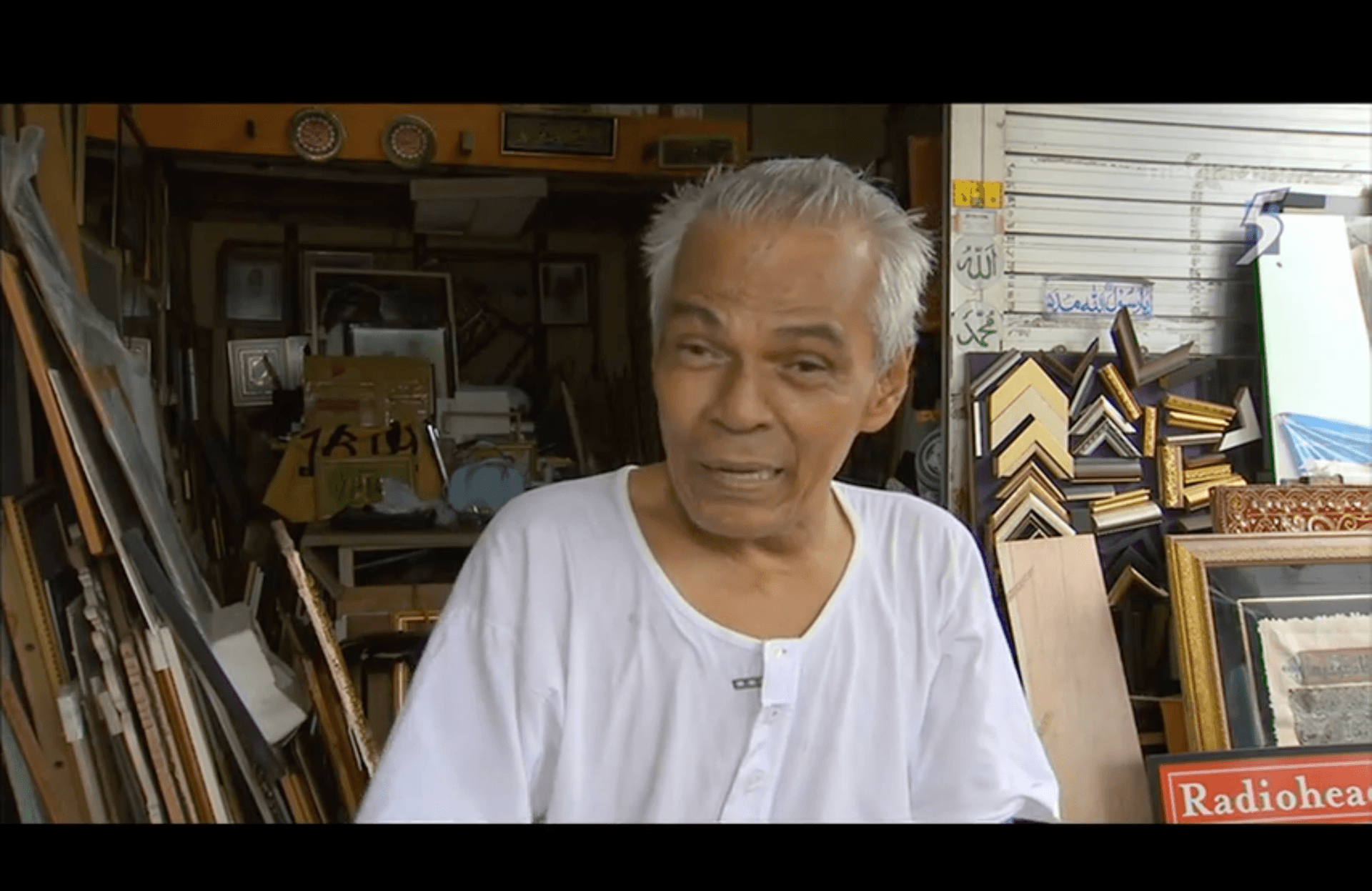
Screenshot from Channel NewsAsia interview with Sultan Maricar
A neighbourhood landmark by Khalid Mosque
Rising rentals in the central business district pushed our business to move again in the late 1990s. This time, a space was found closer to home, next to Khalid Mosque at 136 Joo Chiat Road, in the family's own neighbourhood.
Our shop soon became a familiar landmark in the East. Generations of families walked through its doors with wedding portraits, batik textiles, children's drawings, sports jerseys, and heirloom photographs. Many customers returned year after year, bringing new chapters of their lives to be framed. It became common to hear neighbours say, "Got something to frame? Go to Sultan."
During these years, Sultan Maricar was also actively involved in Joo Chiat's community life, lending his time, presence, and support to local activities. His dedication to preserving memories caught wider attention. Most notably, CNA featured him in their 2016 "On The Red Dot" series, highlighting his entrepreneurial spirit and craft, and he was later involved in the art gallery feature "See You Tomorrow" in 2022, celebrating local artisans and their stories.
Our workshop was more than a business; it was a place where conversations started, stories were shared, and memories were prepared to hang proudly on walls. The tools and materials continued to improve: better techniques, acid-free boards, and higher‑quality mouldings, but the heart of our work remained the same: listen carefully, advise honestly, and treat every piece as if it were irreplaceable.
Weathering COVID and finding a new home
When COVID‑19 hit in 2020, everything changed. Foot traffic slowed, events were cancelled, and like many small businesses, our workshop faced months of uncertainty. Our shop beside Khalid Mosque eventually closed when the space, owned by the mosque, had to be returned for renovation works. During those years, our business shifted through a few temporary locations, doing whatever it could to keep the craft and the family name alive.
Even as the world seemed uncertain, Sultan quietly began learning to adapt. He started using Facebook to share our workshop's work, WhatsApp to guide customers remotely, Google reviews to build trust online, and PayNow for easier payments. Technology did not come naturally to him, but he kept learning for the sake of his customers, and his warm, friendly personality remained at the centre of every interaction.
The period was challenging, but it also revealed how deeply framing is tied to memory and meaning. Even in difficult times, people continued to bring in family photos, memorial portraits, and keepsakes that needed to be preserved. Frames became a quiet way to honour loved ones, brighten up homes, and hold on to stories when the world felt unstable.
In early 2024, a new permanent home was found at 312 Joo Chiat Road, in a traditional shophouse. The move felt like a return to roots, a compact yet characterful space in a neighbourhood rich with history and culture, where our craft could continue to grow.
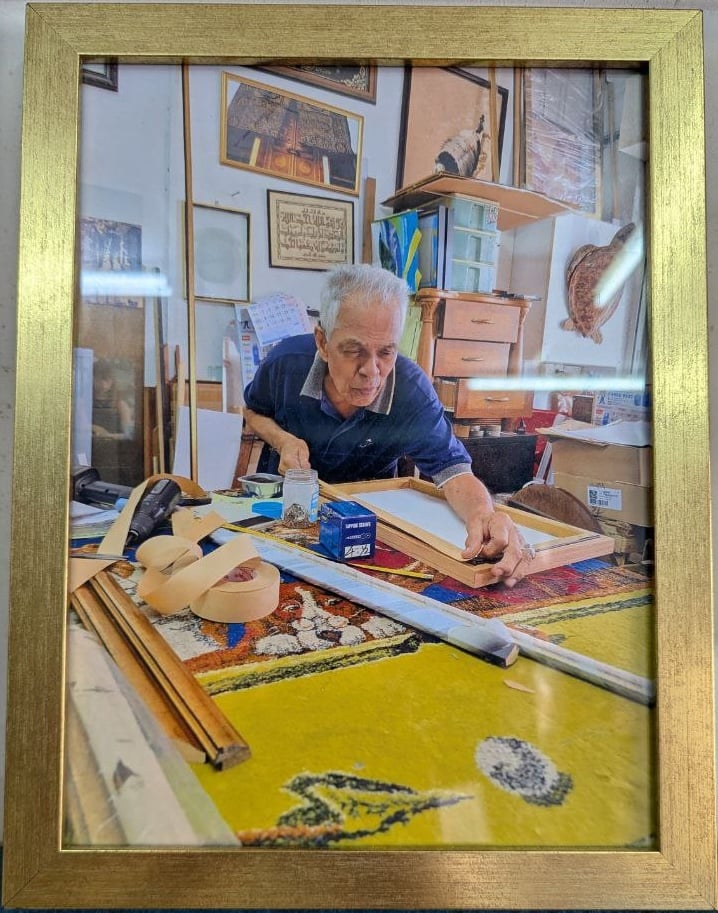
Sultan Maricar while framing. Photo taken by client.
A new chapter and the third generation
In 2025, our business entered its third‑generation chapter. After decades at the workbench and serving the community, Sultan Maricar passed away in March 2025. From April 2025 onward, Salman, the third child of Sultan, stepped up to carry the Sultan Maricar name forward.
Salman had been helping in our shop since primary school, always around handling the backend: setting up Facebook, replying on WhatsApp, supporting the finances. Now, guided by the same values that shaped our workshop since 1924, he expanded the digital presence further by starting Instagram and developing the website, using these platforms to reach a new audience while staying true to the heritage and warmth his grandfather and father embodied.
Today, our team works with a blend of traditional techniques and modern tools. Mats are still cut by hand, corners still receive careful inspection, and every piece is still treated as irreplaceable. At the same time, our workshop uses improved machinery, archival‑grade materials, and a wide range of glass and acrylic options to better protect artwork, textiles, and memorabilia for decades to come.
Clients now bring in everything from vintage black‑and‑white photographs to contemporary prints and sports memorabilia, but the principle remains unchanged: understand the story behind each piece, then build a frame worthy of that story.
More than frames: preserving Singapore's stories
Across more than a century, our business has moved from Market Street to the Hong Leong Building basement, to beside Khalid Mosque, through temporary spaces during COVID, and finally to Joo Chiat Road. Through every move, one thread has stayed unbroken: a belief that framing is not just about wood and glass, but about trust.
When someone walks into our shophouse with a photograph, artwork, or keepsake, they are not simply ordering a frame, but they are asking for a memory to be protected. The role of Sultan Maricar Frame Maker is to honour that trust, to preserve those stories, and to help them live on for the next generation.
This is the first 102 years of the journey. With each passing year, that number will change, but the promise remains the same: to keep caring for memories with the skill, warmth, and quiet pride that have defined the Maricar name since 1924.
Let's Preserve Your Story Together
Share your vision with us, and we'll craft a frame worthy of your memories. Free consultation. Expert guidance. 102 years of trust.
Quick Quote Request
Why Choose Us?
102 Years of Heritage Experience
Three generations of master craftsmen since 1924
Premium Materials
Specially sourced from Europe and Asia
Excellent Customer Service
5-star rated service with personalised consultations
Expert Workmanship
Meticulous attention to detail in every frame we craft